How to get more content from your long-form videos
 Uliana Glagoleva
People don’t watch long videos the way they used to. We’ve gotten so used to short, fast content that committing to a 40-minute podcast or a long YouTube video can suddenly feel like a lot.
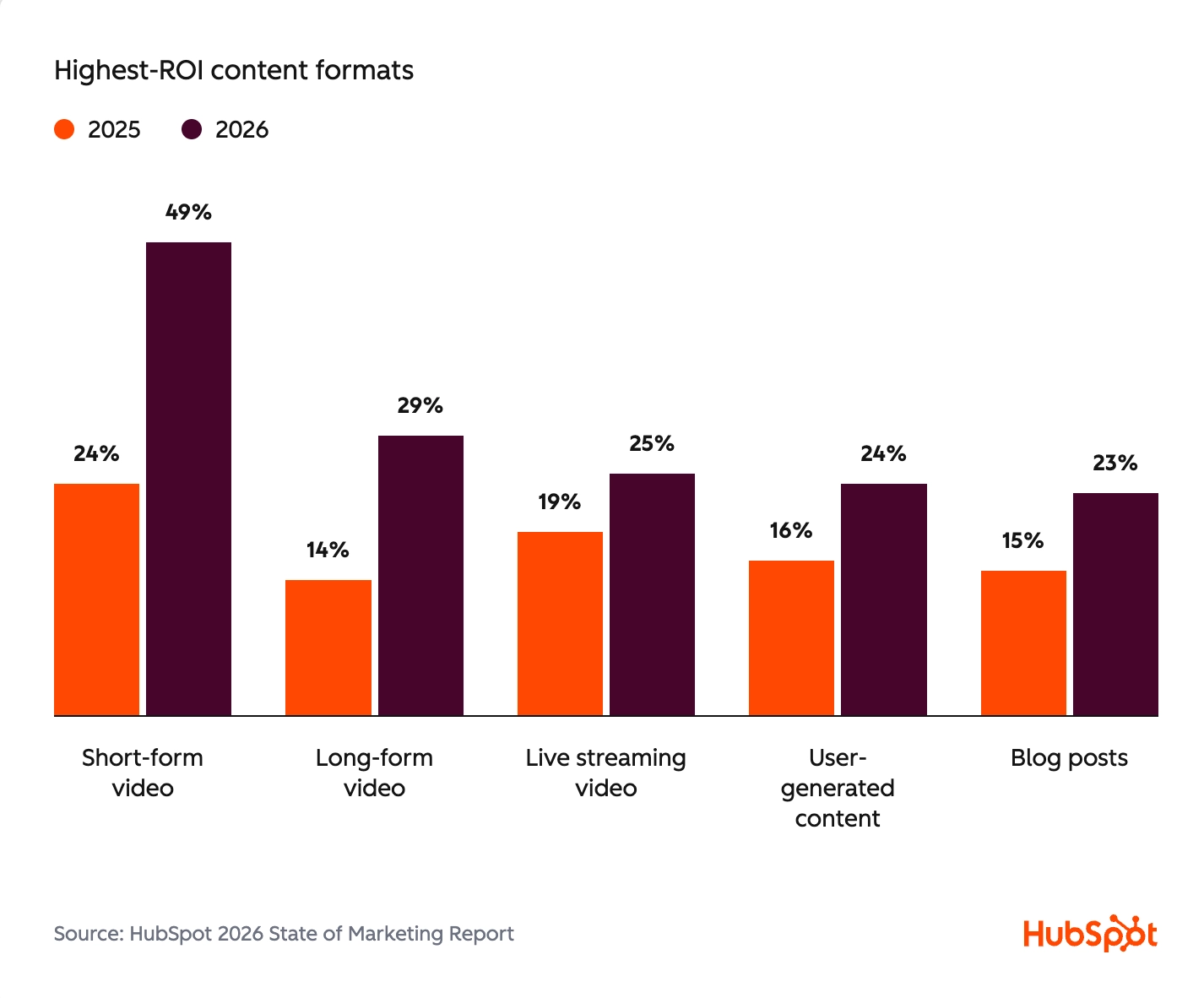
And the numbers kind of explain why short-form has taken over our feeds. According to HubSpot’s 2026 State of Marketing data, 60% of marketers use short-form video, and nearly half say it delivers the highest ROI of any content format.
The sad part is how much interesting stuff gets buried because of it.
You can have a genuinely great 40-second story sitting somewhere around minute 26 of a podcast. Or a useful answer that took three minutes to get to because. Unless someone watches the whole thing, they’ll probably never see it.
That's one of the reasons I like clips so much. And there are quite a few other pretty good reasons to make them.
Find people who would never watch the full video
This is probably the biggest one.
Getting someone who has never heard of you to click on a 45-minute video is a big ask. Watching a 30-second clip while scrolling is much easier.
Short clips give people a small introduction to you and your content without asking for much commitment. They might discover one interesting idea, watch another clip a few days later and eventually end up on your YouTube channel.
Basically, your long-form content is great for people who are already interested. Short-form gives more people a chance to become interested in the first place.
One person might find you through a funny moment from an interview. Someone else might stop for a practical tip. Another person might completely disagree with a hot take and open the full episode just to hear the context.
You don't really know which moment will bring someone in until you start posting them.
Promote the full video without making an ad for it
There are only so many times you can post “New episode is live!” before it gets boring.
A clip does the same promotional job in a much better way because you're actually giving people something to watch. Take one of the strongest moments from the full video and let it work as a preview. If someone wants more context, the complete conversation is already there waiting for them.
This works especially well when a clip ends at a point where there is naturally more to discover. You don't need a dramatic “WATCH THE FULL EPISODE NOW” screen. Sometimes a simple reference to the full video is enough.
The clip has already done the convincing.
Turn one upload into a week of content
Let's say you publish one long-form video every week. Without clips, that's four major pieces of video content a month.
Now imagine you pull five good moments from every video. Suddenly those four videos have also given you 20 short-form posts. And you didn't have to come up with 20 completely new ideas. Post those as YouTube Shorts, Instagram Reels and TikToks. Take a more professional or educational moment and bring it to LinkedIn. Turn a strong opinion into a tweet or a thread. Pull out a few key points and you have the basis for a carousel or even a blog post. The same idea can travel across platforms without feeling like you're posting the exact same thing everywhere. Someone might discover you through a Reel, someone else through a LinkedIn post, and another person through a YouTube Short. They’re all finding different pieces of the same original video.
This is one of my favourite things about repurposing long-form content. The difficult part has already happened. You researched the topic, found the guest, prepared the questions, recorded the conversation or wrote the script. You're not starting from zero every time you need something to post.
One long video can keep your social channels active for days after the original upload.
Give good moments a second chance
Not everyone watches a long video from beginning to end. Which means the best moment in your entire episode could happen at minute 37 and a huge part of your audience will never see it. That's a little painful when you think about it.
Clipping gives those moments another chance. Maybe your guest said something genuinely surprising halfway through an interview. Maybe there was a 45-second explanation that was more useful than anything else in the episode. Maybe you accidentally made a joke that was actually funny. Pull it out.
A moment doesn't become less valuable just because it happened in the middle of a long video.
Learn what your audience actually cares about
There's another benefit that isn't talked about as much.
Clips are a pretty easy way to test ideas. If you cut several different moments from the same episode, you can see which topics people actually respond to. Maybe the clip you thought was the strongest gets ignored, while some random 25-second answer gets thousands of views and a bunch of comments. That's useful information.
Over time, you start seeing patterns. Which topics make people stop? What questions get comments? Which guests or formats get shared? You can use that when planning your next long-form video.
So short-form doesn't only promote the content you've already made. It can help you figure out what to make next.
One recording, a lot more mileage
If you're already making long-form video, you already have most of the material you need for short-form. That's what makes clipping so useful.
You can reach people who don't know you yet, promote your full videos, post more consistently and learn which parts of your content people actually care about. All without recording something new every single day.
So before you close the project file after publishing your next long video, go through it one more time. There's probably a week's worth of content still sitting in there.